
In this article, you will learn how to build a unified scikit-learn pipeline that combines text embeddings generated by a lightweight open-source language model with structured tabular features for classification tasks.
In this article, you will learn how to build a unified scikit-learn pipeline that combines text embeddings generated by a lightweight open-source language model with structured tabular features for classification tasks.
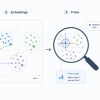
In this article, you will learn how to use probing classifiers, UMAP visualization, and SHAP values to interpret and analyze the quality of text embeddings generated by large language models.
In this article, you will learn how to think in terms of vectorized operations using NumPy, replacing slow Python loops with efficient array-level computations.
In this article, you will learn how Gemma 4, Llama 3, and Mistral implement tool calling locally, and what trade-offs each model family presents for real-world deployment.
In this hands-on article, I will show you how to bridge the gap between reactive machine learning models and proactive AI agents that make decisions and execute actions autonomously.
Build a fully local RAG system on a laptop using quantized models, compact embeddings, and file based indexes.
In this article, you will learn three practical strategies for managing small context windows in large language models, along with working Python examples that demonstrate how two of those strategies are implemented.

In this article, you will learn seven concrete regression tests for catching the orchestration-layer failure modes that matter most before deploying an AI agent to production.

This article analyzes, illustrates, and categorizes the core functions and key roles of latent spaces in machine learning models: descriptive, generative, and predictive.

In this article, you will learn the conceptual and practical differences between retrieval and memory in agentic AI systems, and how to combine both effectively.