
Build a fully local RAG system on a laptop using quantized models, compact embeddings, and file based indexes.
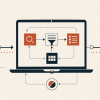
Build a fully local RAG system on a laptop using quantized models, compact embeddings, and file based indexes.

In this article, you will learn seven concrete regression tests for catching the orchestration-layer failure modes that matter most before deploying an AI agent to production.

In this article, you will learn the conceptual and practical differences between retrieval and memory in agentic AI systems, and how to combine both effectively.
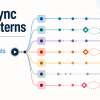
In this article, you will learn seven async patterns for running AI agents concurrently in Python, what each pattern is suited for, and the production-level pitfalls to watch out for with each.
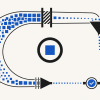
Learn how context accumulation, retry loops, and static prompts silently inflate token costs in agentic AI systems.
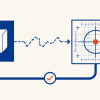
In this article, you will learn how to design AI agents that can reliably self-correct by grounding their feedback loops in external verification rather than the model’s own judgment.

Discover 7 chunking strategies for RAG pipelines and learn which approach fits your document type and query needs.
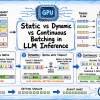
In this article, you will learn how static, dynamic, and continuous batching work in LLM inference, and why the differences between them matter at production scale.

In this article, you will learn the seven architectural components that separate a production-grade agentic AI system from a demo script, and how each one fits into the agent’s core feedback loop.
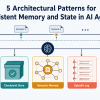
In this article, you will learn the five core architectural patterns for managing persistent memory and state in AI agents, and why treating them as deliberate design decisions is essential for production-grade systems.