
In this article, you will learn what Python descriptors are and how to use them to build three types of controlled attributes: validated, computed, and lazily loaded.
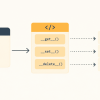
In this article, you will learn what Python descriptors are and how to use them to build three types of controlled attributes: validated, computed, and lazily loaded.

In this article, you will learn how to build a lightweight, end-to-end RAG pipeline using scikit-learn for vector retrieval and open-source models for embeddings and text generation, without the use of paid APIs or heavyweight frameworks.
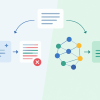
In this article, you will learn how to benchmark a deterministic 3-Tiered Graph-RAG system against a standard vector RAG pipeline on fact-dense queries, and what the results reveal about matching prompt complexity to model capacity.
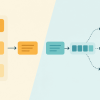
In this article, you will learn how synchronous and asynchronous execution patterns differ architecturally, and how to choose between them when deploying LLM-based agents to production.
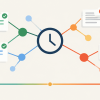
In this article, you will learn how to add a lightweight temporal reasoning layer to a Graph-RAG system so that it can distinguish fresh facts from stale ones.
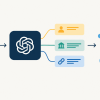
In this article, you will learn how to automatically extract structured knowledge from raw text and populate a knowledge graph with SPOC quads using a local LLM via Ollama.
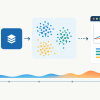
In this article, you will learn what embedding drift is, why it matters for production large language models, and how to implement two practical techniques to detect it.
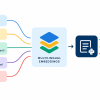
Learn how to build a multilingual text classification pipeline using multilingual LLM embeddings and Scikit-learn, without training separate models for each language.
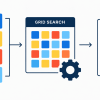
In this article, you will learn how to treat prompt templates as tunable hyperparameters for a language model, using scikit-learn’s grid search to find the best-performing prompt for a zero-shot text classification task.
In this article, you will learn how to build, track, compare, and register scikit-learn pipelines that integrate large language models using Scikit-LLM and MLflow.