
In this article, you will learn how to add a lightweight temporal reasoning layer to a Graph-RAG system so that it can distinguish fresh facts from stale ones.

In this article, you will learn how to add a lightweight temporal reasoning layer to a Graph-RAG system so that it can distinguish fresh facts from stale ones.
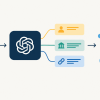
In this article, you will learn how to automatically extract structured knowledge from raw text and populate a knowledge graph with SPOC quads using a local LLM via Ollama.
In this article, you will learn the mechanical difference between retrieval-augmented generation and fine-tuning, when each technique is the right tool, and how to decide which one, or both, your production system actually needs.
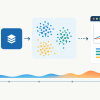
In this article, you will learn what embedding drift is, why it matters for production large language models, and how to implement two practical techniques to detect it.
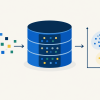
In this article, you will learn how a vector database works under the hood by building one from scratch in ten incremental steps using Python and NumPy.
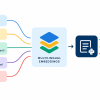
Learn how to build a multilingual text classification pipeline using multilingual LLM embeddings and Scikit-learn, without training separate models for each language.
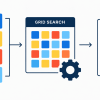
In this article, you will learn how to treat prompt templates as tunable hyperparameters for a language model, using scikit-learn’s grid search to find the best-performing prompt for a zero-shot text classification task.

In this article, you will learn what model distillation is, how it has evolved for large language models, and why it has become one of the most contested topics in the AI industry.
In this article, you will learn how to build, track, compare, and register scikit-learn pipelines that integrate large language models using Scikit-LLM and MLflow.
In this article, you will learn how to build a unified scikit-learn pipeline that combines text embeddings generated by a lightweight open-source language model with structured tabular features for classification tasks.