
In this article, you will learn how to implement a hybrid search strategy for RAG systems by combining BM25 lexical search with semantic search, fused together using Reciprocal Rank Fusion.
In this article, you will learn how to implement a hybrid search strategy for RAG systems by combining BM25 lexical search with semantic search, fused together using Reciprocal Rank Fusion.
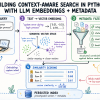
In this article, you will learn how to build a context-aware semantic search engine in Python that combines embedding-based similarity with structured metadata filtering.

In this article, you will learn how to implement vector similarity search in PostgreSQL using the pgvector extension, allowing you to find semantically similar results based on meaning rather than keyword matching.
In this article, you will learn about seven leading LLM observability tools that help AI engineers monitor, evaluate, and debug large language model applications running in production.
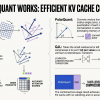
In this article, you will learn how TurboQuant, a novel algorithmic suite recently launched by Google, achieves advanced compression of large language models and vector search engines with no loss of accuracy.
In this article, you will learn how to use scikit-LLM’s text summarization feature to handle large volumes of text in machine learning pipelines.
In this article, you will learn how inference caching works in large language models and how to use it to reduce cost and latency in production systems.
In this article, you will learn how to build efficient long-context retrieval-augmented generation (RAG) systems using modern techniques that address attention limitations and cost challenges.

In this article, you will learn the architectural differences between structured outputs and function calling in modern language model systems.
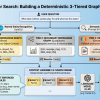
In this article, you will learn how to build a deterministic, multi-tier retrieval-augmented generation system using knowledge graphs and vector databases.