
Compare Ollama, LM Studio, and llama.cpp across five key dimensions to find the right local AI runtime for your workflow.

Compare Ollama, LM Studio, and llama.cpp across five key dimensions to find the right local AI runtime for your workflow.
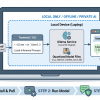
In this article, you will learn how to get a small language model running locally on your own machine in under 15 minutes using Ollama.
In this article, you will learn how scikit-ollama bridges the scikit-learn interface with locally running Ollama models to perform zero-shot text classification; no cloud API required.

In this article, you will learn how to evaluate LLM applications using the three dominant open-source frameworks — RAGAS, DeepEval, and Promptfoo — and why the LLM-as-a-judge mechanism they all rely on has measurable biases you need to actively design around.
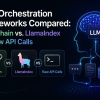
In this article, you will learn how LangChain, LlamaIndex, and raw API calls each solve a different layer of the LLM application stack, and how to choose among them based on what your project actually requires.
In this article, you will learn how to build a text clustering pipeline by combining large language model embeddings with HDBSCAN, a density-based clustering algorithm, to automatically discover topics in unlabeled text data.
In this article, you will learn how to build an end-to-end sentiment analysis pipeline using Scikit-LLM and open-source large language models served through the Groq API.
Learn how to load, adapt, and leverage a pre-trained LLM for a multi-label classification task where a piece of text can be assigned one or multiple categories.
In this article, you will learn how to build multimodal AI capabilities — image classification, image captioning, and speech transcription — that run entirely in the browser using Transformers.js, with no server, no API key, and no data leaving the user’s device.

In this article, you will learn how sentence embeddings work and how to build a fully client-side semantic search engine using Transformers.js, with no server, no API key, and no backend infrastructure required.