
In this article, you will learn how a vector database works under the hood by building one from scratch in ten incremental steps using Python and NumPy.
In this article, you will learn how a vector database works under the hood by building one from scratch in ten incremental steps using Python and NumPy.
In this article, you will learn five essential Python concepts that every AI engineer must master to build scalable, production-grade AI systems. Topics we will cover include: How generators and lazy evaluation allow you to stream large datasets with constant memory overhead. How context managers, asynchronous programming, and Pydantic models help you manage hardware resources, […]

This article builds on a previous tutorial by assuming that, when dealing with an agent, things will go wrong, and shows how to recover gracefully when they do.
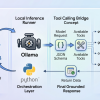
In this article, you will learn how to build a local, privacy-first tool-calling agent using the Gemma 4 model family and Ollama.

In this article, you will learn the architectural differences between structured outputs and function calling in modern language model systems.
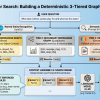
In this article, you will learn how to build a deterministic, multi-tier retrieval-augmented generation system using knowledge graphs and vector databases.
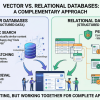
In this article, you will learn why production AI applications need both a vector database for semantic retrieval and a relational database for structured, transactional workloads.
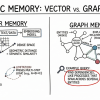
In this article, you will learn how vector databases and graph RAG differ as memory architectures for AI agents, and when each approach is the better fit.
Our series on visualizing the foundations of machine learning continues with our latest entry, which covers uncertainty, probability, and noise in machine learning.
In the latest entry in our series on visualizing the foundations of machine learning, we focus on supervised learning, the foundation of predictive modeling.