
This article is the first entry in our series on visualizing the foundations of machine learning, focusing on the engine of machine learning optimization: gradient descent.
This article is the first entry in our series on visualizing the foundations of machine learning, focusing on the engine of machine learning optimization: gradient descent.

Google Jules is an autonomous, asynchronous agentic coding assistant developed by Google DeepMind, which harnesses the Gemini family of models and is designed to integrate directly with existing code repositories and autonomously perform development tasks.
Introduction Choosing the right text representation is a critical first step in any natural language processing (NLP) project. While both word and sentence embeddings transform text into numerical vectors, they operate at different scopes and are suited for different tasks. The key distinction is whether your goal is semantic or syntactic analysis. Sentence embeddings are […]
Let’s explore five next-gen retrieval strategies that are redefining the RAG landscape.
Let’s take a look at 10 newsletters that can help machine learning enthusiasts stay informed.
This tutorial will walk you through seven practical Pandas scenarios and the tricks that can enhance your data preparation and feature engineering process, setting you up for success in your next machine learning project.
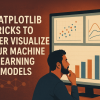
Check out these 7 Matplotlib tricks to help better visualize your machine learning models.

This article introduces how system prompts, through specific examples from the above-mentioned prompts, can reveal 5 specific lessons.
This article will explore 7 practical Pandas tricks that can help transform your time-series data, which can help lead to enhanced models and more powerful prediction.

This tutorial will explore three of the most effective techniques to make k-means work better in the wild, specifically using k-means++ for smarter centroid initialization, leveraging the silhouette score to find the optimal number of clusters, and applying the kernel trick to handle non-spherical data.