
In this article, you will learn how LLM inference optimization works and which techniques to apply to make language models faster, cheaper, and more reliable in production.
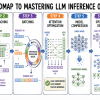
In this article, you will learn how LLM inference optimization works and which techniques to apply to make language models faster, cheaper, and more reliable in production.
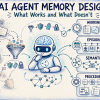
In this article, you will learn how to design reliable memory systems for AI agents, covering both the patterns that work and the common architectural mistakes that cause persistent, hard-to-trace failures. Topics we will cover include: What agent memory actually means and how it differs from context, prompts, and static knowledge bases. Write and retrieval […]
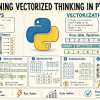
In this article, you will learn how to think in terms of vectorized operations using NumPy, replacing slow Python loops with efficient array-level computations.

In this article, you will learn the conceptual and practical differences between retrieval and memory in agentic AI systems, and how to combine both effectively.
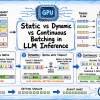
In this article, you will learn how static, dynamic, and continuous batching work in LLM inference, and why the differences between them matter at production scale.

In this article, you will learn how to build a complete agentic workflow in Python with LangGraph, from a single model call to a tool-using agent with persistent conversation memory.
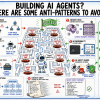
In this article, you will learn the architectural and operational anti-patterns that cause AI agent projects to fail, and how to avoid each one.
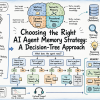
In this article, you will learn how to choose the right memory strategy for an AI agent by working through a simple decision tree, one category of information at a time.
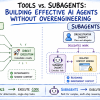
In this article, you will learn how to decide whether a given piece of agent functionality should be built as a tool or as a subagent, and how to avoid overengineering your agent architecture in the process.
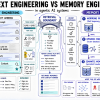
In this article, you will learn how context engineering and memory engineering solve different problems in agentic AI systems, and how the two disciplines meet at the point where retrieved memory enters the context window.