
In this article, you will learn how to evaluate AI agents rigorously by examining their full execution process rather than only their final outputs.
In this article, you will learn how to evaluate AI agents rigorously by examining their full execution process rather than only their final outputs.
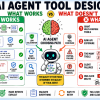
In this article, you will learn how tool design — not model capability — is the root cause of most AI agent failures, and what concrete design patterns you can apply to fix it.
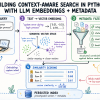
In this article, you will learn how to build a context-aware semantic search engine in Python that combines embedding-based similarity with structured metadata filtering.

In this article, you will learn how to implement vector similarity search in PostgreSQL using the pgvector extension, allowing you to find semantically similar results based on meaning rather than keyword matching.

In this article, you will learn how to apply a structured decision tree to choose the right agentic design pattern for any AI system you are building.
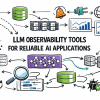
In this article, you will learn about seven leading LLM observability tools that help AI engineers monitor, evaluate, and debug large language model applications running in production.
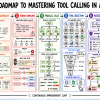
In this article, you will learn how to design, scale, and secure tool calling in AI agents so that the layer connecting model reasoning to real-world action holds up in production.
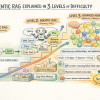
In this article, you will learn what agentic RAG is, how it differs from traditional RAG, and when to use it.
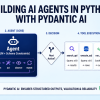
In this article, you will learn how to build production-ready AI agents in Python using Pydantic AI, with structured outputs, custom tools, and dependency injection.
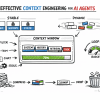
In this article, you will learn what context engineering is and how to apply it systematically to keep AI agents reliable, cost-efficient, and accurate in production.