
In this article, you will learn how AI agent memory works across working memory, external memory, and scalable memory architectures for building agents that improve over time.

In this article, you will learn how AI agent memory works across working memory, external memory, and scalable memory architectures for building agents that improve over time.
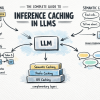
In this article, you will learn how inference caching works in large language models and how to use it to reduce cost and latency in production systems.

In this article, you will learn how to systematically select and apply agentic AI design patterns to build reliable, scalable agent systems.
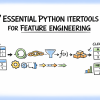
In this article, you will learn how to use Python’s itertools module to simplify common feature engineering tasks with clean, efficient patterns.
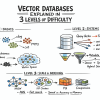
In this article, you will learn how vector databases work, from the basic idea of similarity search to the indexing strategies that make large-scale retrieval practical.

In this article, you will learn how to design, implement, and evaluate memory systems that make agentic AI applications more reliable, personalized, and effective over time.

Are you building agents that remember? Here are the frameworks that will help you implement effective memory systems for your AI agents.
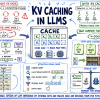
In this article, you will learn how key-value (KV) caching eliminates redundant computation in autoregressive transformer inference to dramatically improve generation speed.

Build a working MCP server in Python using FastMCP with tools, resources, and prompts.
Discover how to implement speculative decoding for 2-3x faster LLM inference with code examples.