
In this article, you will learn how to treat prompt templates as tunable hyperparameters for a language model, using scikit-learn’s grid search to find the best-performing prompt for a zero-shot text classification task.
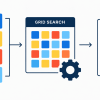
In this article, you will learn how to treat prompt templates as tunable hyperparameters for a language model, using scikit-learn’s grid search to find the best-performing prompt for a zero-shot text classification task.

In this article, you will learn what model distillation is, how it has evolved for large language models, and why it has become one of the most contested topics in the AI industry.
In this article, you will learn how to fine-tune an agentic AI system holistically, covering all four critical dials: training data, parameter-efficient fine-tuning, runtime hyperparameters, and preference alignment.
In this article, you will learn where traditional machine learning reaches its limits, what agentic reasoning adds, and how combining the two produces AI systems more capable than either approach alone.
In this article, you will learn how to build, track, compare, and register scikit-learn pipelines that integrate large language models using Scikit-LLM and MLflow.
Compare Chain of Thought and Tree of Thoughts reasoning to understand which approach best fits your AI agent.
In this article, you will learn how Python’s dataclass decorator can replace fragile configuration dictionaries with structured, readable, and maintainable data models.
In this article, you will learn the key differences between single-agent and multi-agent AI systems, and how to decide which architecture fits your problem.
In this article, you will learn how to design reliable memory systems for AI agents, covering both the patterns that work and the common architectural mistakes that cause persistent, hard-to-trace failures. Topics we will cover include: What agent memory actually means and how it differs from context, prompts, and static knowledge bases. Write and retrieval […]

In this article, you will learn three concrete techniques for making machine learning model predictions interpretable, covering both global and local explanations across tree-based and neural network architectures.