
In this article, you will learn how Python’s iterators and generators can be used to build memory-efficient data processing pipelines that handle large files without loading them into memory all at once.
In this article, you will learn how Python’s iterators and generators can be used to build memory-efficient data processing pipelines that handle large files without loading them into memory all at once.
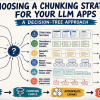
In this article, you will learn how to choose the right chunking strategy for a retrieval-augmented generation system by working through a structured decision tree tied to the properties of your documents and retrieval task.
In this article, you will learn how to build a custom LLM evaluation harness in Python from scratch, structured around four modular components that give you full control over how your models are tested and scored.

In this article, you will learn how to build a lightweight, end-to-end RAG pipeline using scikit-learn for vector retrieval and open-source models for embeddings and text generation, without the use of paid APIs or heavyweight frameworks.
In this article, you will learn what the major AI agent benchmarks measure, how they differ from traditional model benchmarks, and how to use them as directional signals rather than performance guarantees.
In this article, you will learn how to fine-tune Llama 3 8B for custom tool calling using Unsloth and QLoRA, so that the model reliably outputs structured JSON payloads for a specific API schema.
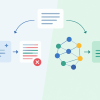
In this article, you will learn how to benchmark a deterministic 3-Tiered Graph-RAG system against a standard vector RAG pipeline on fact-dense queries, and what the results reveal about matching prompt complexity to model capacity.
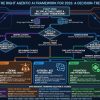
In this article, you will learn how to choose the right agentic AI framework for your production system by working through a structured decision-tree based on your workload’s actual requirements.
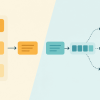
In this article, you will learn how synchronous and asynchronous execution patterns differ architecturally, and how to choose between them when deploying LLM-based agents to production.
In this article, you will learn what an AI agent is and how to build one from scratch in plain Python using the Anthropic API, without relying on any orchestration framework.