
In this article, you will learn how logits, temperature, and top-p sampling work together to control next-token prediction in large language models.
In this article, you will learn how logits, temperature, and top-p sampling work together to control next-token prediction in large language models.
This article builds on a previous tutorial by assuming that, when dealing with an agent, things will go wrong, and shows how to recover gracefully when they do.
In this article, you will learn how to implement a hybrid search strategy for RAG systems by combining BM25 lexical search with semantic search, fused together using Reciprocal Rank Fusion.
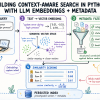
In this article, you will learn how to build a context-aware semantic search engine in Python that combines embedding-based similarity with structured metadata filtering.

Learn how to build a multi-agent system using OpenAI Agents SDK, GPT-5.4 mini, Olostep Web API, web scraping, specialist agents, tracing, and a Reflex web app.

In this article, you will learn what agentic programming is, how production-grade AI agents are built from the ground up, and what it takes to go from zero experience to shipping a real agent in production.
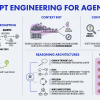
In this article, you will learn how prompt engineering changes fundamentally when applied to agentic AI systems, and what principles and patterns enable reliable agent behavior at scale.

In this article, you will learn how to implement vector similarity search in PostgreSQL using the pgvector extension, allowing you to find semantically similar results based on meaning rather than keyword matching.

In this article, you will learn how to apply a structured decision tree to choose the right agentic design pattern for any AI system you are building.
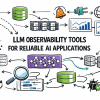
In this article, you will learn about seven leading LLM observability tools that help AI engineers monitor, evaluate, and debug large language model applications running in production.