
In this article, you will learn how the seven layers of a production AI agent stack fit together, from the foundation model down to deployment infrastructure.
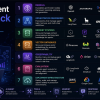
In this article, you will learn how the seven layers of a production AI agent stack fit together, from the foundation model down to deployment infrastructure.

In this article, you will learn how to distinguish agentic workflows from autonomous agents by focusing on who owns control flow — a human writing code in advance, or a model reasoning at runtime.
In this article, you will learn why a large context window is not the same thing as agent memory, and how techniques like retrieval, compression, and summarization fit together in an agent’s cognitive stack.
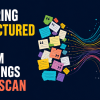
In this article, you will learn how to build a text clustering pipeline by combining large language model embeddings with HDBSCAN, a density-based clustering algorithm, to automatically discover topics in unlabeled text data.

In this article, you will learn how to build AI agents that can browse and interact with real websites using Playwright, browser-use, and LangGraph.
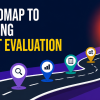
In this article, you will learn how to evaluate AI agents rigorously by examining their full execution process rather than only their final outputs.
In this article, you will learn how to build an end-to-end sentiment analysis pipeline using Scikit-LLM and open-source large language models served through the Groq API.
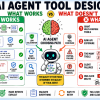
In this article, you will learn how tool design — not model capability — is the root cause of most AI agent failures, and what concrete design patterns you can apply to fix it.

In this article, you will learn five essential Python concepts that every AI engineer must master to build scalable, production-grade AI systems. Topics we will cover include: How generators and lazy evaluation allow you to stream large datasets with constant memory overhead. How context managers, asynchronous programming, and Pydantic models help you manage hardware resources, […]
Learn how to load, adapt, and leverage a pre-trained LLM for a multi-label classification task where a piece of text can be assigned one or multiple categories.