
In this article, you will learn how to build production-ready AI agents in Python using Pydantic AI, with structured outputs, custom tools, and dependency injection.
In this article, you will learn how to build production-ready AI agents in Python using Pydantic AI, with structured outputs, custom tools, and dependency injection.
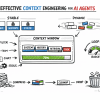
In this article, you will learn what context engineering is and how to apply it systematically to keep AI agents reliable, cost-efficient, and accurate in production.
In this article, you will learn how to build a fully functional AI agent that runs entirely on your own machine using small language models, with no internet connection and no API costs required. Topics we will cover include: What AI agents and small language models are, and why running them locally is a practical […]

In this article, you will learn how AI agent memory works across working memory, external memory, and scalable memory architectures for building agents that improve over time.
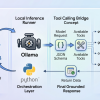
In this article, you will learn how to build a local, privacy-first tool-calling agent using the Gemma 4 model family and Ollama.
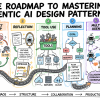
In this article, you will learn how to systematically select and apply agentic AI design patterns to build reliable, scalable agent systems.
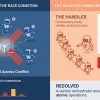
In this article, you will learn how to identify, understand, and mitigate race conditions in multi-agent orchestration systems.

In this article, you will learn how to implement state-managed interruptions in LangGraph so an agent workflow can pause for human approval before resuming execution.
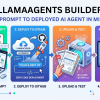
In this article, you will learn how to build, deploy, and test a no-code document-processing AI agent with LlamaAgents Builder in LlamaCloud.
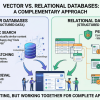
In this article, you will learn why production AI applications need both a vector database for semantic retrieval and a relational database for structured, transactional workloads.