
This article builds on a previous tutorial by assuming that, when dealing with an agent, things will go wrong, and shows how to recover gracefully when they do.

This article builds on a previous tutorial by assuming that, when dealing with an agent, things will go wrong, and shows how to recover gracefully when they do.

Learn how to build a multi-agent system using OpenAI Agents SDK, GPT-5.4 mini, Olostep Web API, web scraping, specialist agents, tracing, and a Reflex web app.

In this article, you will learn what agentic programming is, how production-grade AI agents are built from the ground up, and what it takes to go from zero experience to shipping a real agent in production.
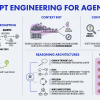
In this article, you will learn how prompt engineering changes fundamentally when applied to agentic AI systems, and what principles and patterns enable reliable agent behavior at scale.

In this article, you will learn how to apply a structured decision tree to choose the right agentic design pattern for any AI system you are building.
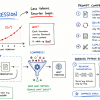
In this article, you will learn what prompt compression is, why it matters for agentic AI loops, and how to implement it practically using summarization and instruction distillation.
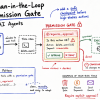
This article illustrates how to implement a permission-gated tool in a Python agent, resulting in a robust, cost-free interception mechanism based on a simple decorator pattern.
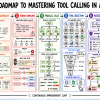
In this article, you will learn how to design, scale, and secure tool calling in AI agents so that the layer connecting model reasoning to real-world action holds up in production.
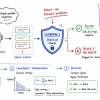
Describing and implementing two simple yet effective approaches to ensure AI agent safety: semantic drift based of cosine distance and confidence thresholding based on log-probability entropy.
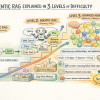
In this article, you will learn what agentic RAG is, how it differs from traditional RAG, and when to use it.