
In this article, you will learn the architectural differences between structured outputs and function calling in modern language model systems.

In this article, you will learn the architectural differences between structured outputs and function calling in modern language model systems.
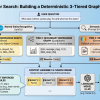
In this article, you will learn how to build a deterministic, multi-tier retrieval-augmented generation system using knowledge graphs and vector databases.

A hands-on guide to understand how to test LLM and agent-based applications using both RAGAs and frameworks based on G-Eval, concretely, by leveraging DeepEval.

In this article, you will learn how reranking improves the relevance of results in retrieval-augmented generation (RAG) systems by going beyond what retrievers alone can achieve.
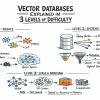
In this article, you will learn how vector databases work, from the basic idea of similarity search to the indexing strategies that make large-scale retrieval practical.
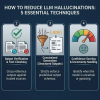
In this article, you will learn why large language model hallucinations happen and how to reduce them using system-level techniques that go beyond prompt engineering.
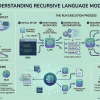
In this article, you will learn what recursive language models are, why they matter for long-input reasoning, and how they differ from standard long-context prompting, retrieval, and agentic systems.
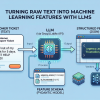
This article presents a deep dive into the full process of applying feature engineering on structured text, turning it into tabular data suitable for a machine learning model.
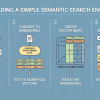
In this article, you will learn how to build a simple semantic search engine using sentence embeddings and nearest neighbors.
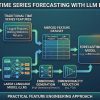
In this article, you will learn whether incorporating large language model embeddings as engineered features can meaningfully improve time series forecasting performance.