
In this article, you will learn how synchronous and asynchronous execution patterns differ architecturally, and how to choose between them when deploying LLM-based agents to production.
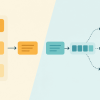
In this article, you will learn how synchronous and asynchronous execution patterns differ architecturally, and how to choose between them when deploying LLM-based agents to production.

In this article, you will learn what an AI agent is and how to build one from scratch in plain Python using the Anthropic API, without relying on any orchestration framework.

In this article, you will learn how to add a lightweight temporal reasoning layer to a Graph-RAG system so that it can distinguish fresh facts from stale ones.

In this article, you will learn what AI agent observability means, why traditional monitoring tools fall short for agentic systems, and how to implement structured logging, distributed tracing, and practical debugging workflows for AI agents.
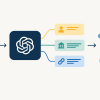
In this article, you will learn how to automatically extract structured knowledge from raw text and populate a knowledge graph with SPOC quads using a local LLM via Ollama.

In this article, you will learn how to build a fully local, zero-cost agentic AI workflow using Hermes Agent and Ollama, so that your files, code, and conversations never leave your own hardware.

In this article, you will learn what tool calling and code execution are as agent action primitives, how they differ mechanically, and when to choose one over the other.

In this article, you will learn the key differences between AI workflows and agents, and how to decide which approach is right for your use case before writing a single line of code.
In this article, you will learn the mechanical difference between retrieval-augmented generation and fine-tuning, when each technique is the right tool, and how to decide which one, or both, your production system actually needs.
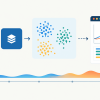
In this article, you will learn what embedding drift is, why it matters for production large language models, and how to implement two practical techniques to detect it.