
In the latest entry in our series on visualizing the foundations of machine learning, we focus on supervised learning, the foundation of predictive modeling.

In the latest entry in our series on visualizing the foundations of machine learning, we focus on supervised learning, the foundation of predictive modeling.
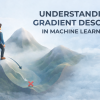
This article is the first entry in our series on visualizing the foundations of machine learning, focusing on the engine of machine learning optimization: gradient descent.
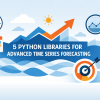
In this article, you will learn five Python libraries that excel at advanced time series forecasting, especially for multivariate, non-stationary, and real-world datasets.
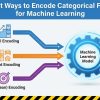
In this article, you will learn three reliable techniques — ordinal encoding, one-hot encoding, and target (mean) encoding — for turning categorical features into model-ready numbers while preserving their meaning.
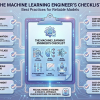
In this article, you will learn a practical, research-informed checklist of best practices that help machine learning engineers build systems that remain reliable long after deployment.
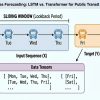
Training and comparing two robust deep learning architecture for a single, common time series analysis task: all step-by-step.
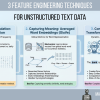
In this article, you will learn practical ways to convert raw text into numerical features that machine learning models can use, ranging from statistical counts to semantic and contextual embeddings.
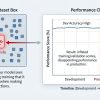
In this article, you will learn what data leakage is, how it silently inflates model performance, and practical patterns for preventing it across common workflows.
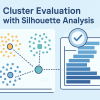
Learn how to evaluate K-means clustering quality using silhouette analysis with Python code examples.
In this article, you will learn how to use Docker to package, run, and ship a complete machine learning prediction service, covering the workflow from training a model to serving it as an API and distributing it as a container image.